This is the single most common decision homeowners hesitate on, and it is almost entirely a taste question rather than a performance one. Here is how the two actually behave once they are down.
What a wet look sealer does
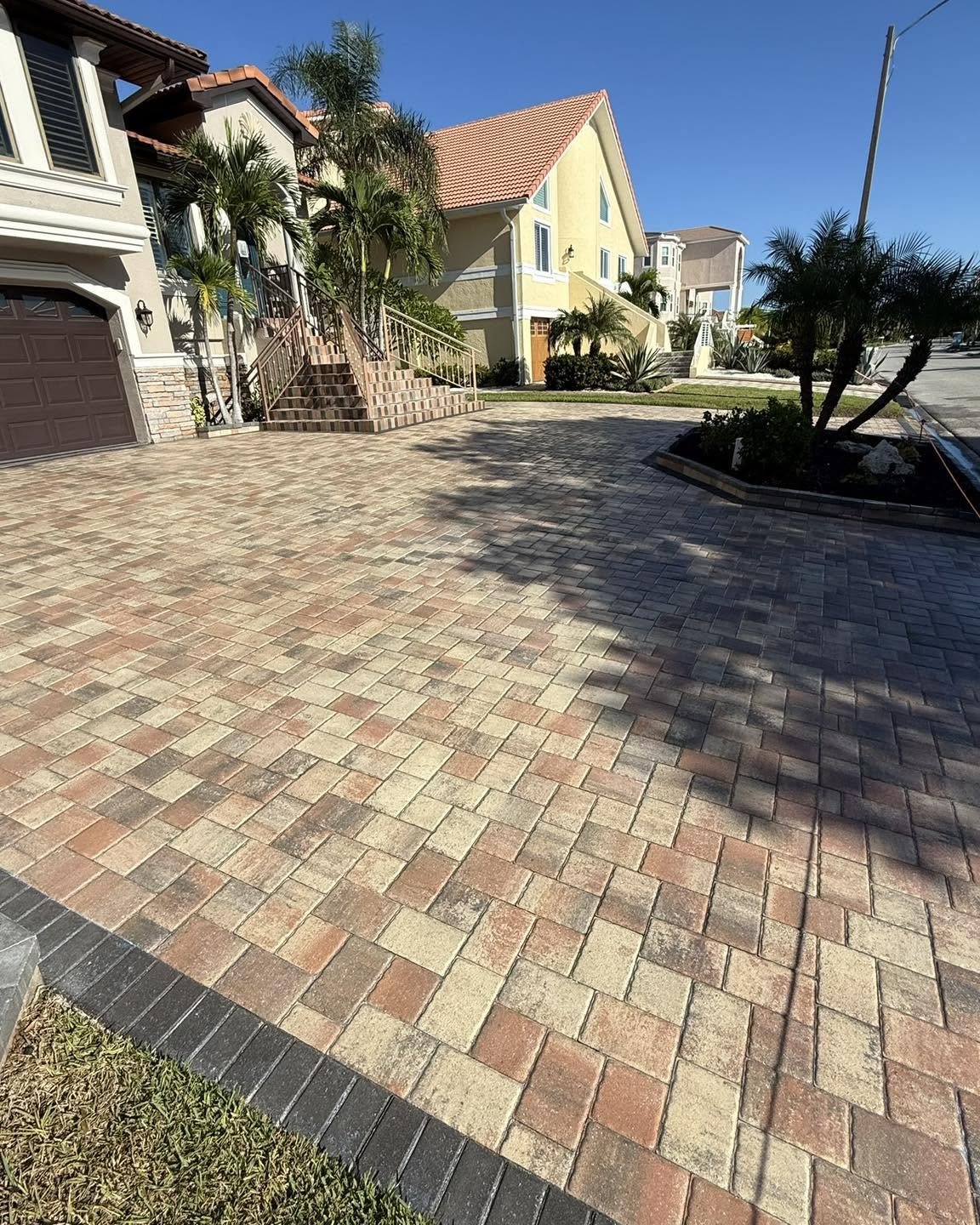
A wet look (or “color enhancing”) sealer forms a film on the surface that saturates the paver, much like the way a driveway looks right after rain. Reds go deeper, charcoals go near-black, and the variation between pavers becomes more pronounced.
- Richest possible color, especially on tumbled or older pavers that have faded.
- The surface film adds a layer of stain resistance against oil and leaf tannins.
- Shows tyre scuffing, traffic lanes, and any application inconsistency more readily.
- Needs a non-slip additive anywhere it goes around a pool.

What a natural finish does
A natural or matte sealer — often a penetrating product — soaks into the paver rather than sitting on top of it. It protects without changing the look much at all.
- Looks like clean, new paver rather than a treated surface.
- Hides wear, scuffs, and uneven traffic patterns far better over time.
- Naturally better traction, which makes it the default for pool decks and lanais.
- Less dramatic on faded pavers — it will clean up beautifully, but it will not restore lost color the way wet look does.
Which one should you pick?
- Choose wet look if your pavers have faded and you want the color back, if the driveway is the front-of-house feature, or if you simply like the richer, glossier look.
- Choose natural if you have a pool deck or lanai, if the pavers are already in good color, or if you would rather the finish be low-maintenance and forgiving.
- Mixing is fine. Plenty of the homes we do in Trinity and Lansbrook get wet look on the driveway and entry, and a matte finish around the pool cage. There is no rule against it and it usually looks deliberate.
Slip resistance around water
Any film-forming sealer is slicker than bare concrete when wet. That does not rule out wet look near a pool — it just means a non-slip additive needs to go into the final coat. It is a fine aggregate suspended in the sealer, it barely changes the appearance, and it makes a real difference barefoot. If a contractor quotes a gloss finish for a pool deck and does not mention the additive, ask why.
Does one last longer than the other in Florida?
In practice they land in the same two-to-three-year window here, but they fail differently. A wet look sealer tends to show its age visually — dulling in the traffic lanes while the edges still look good. A natural finish holds a consistent appearance and instead simply stops repelling water. That is why the water-bead test matters more on matte finishes: it can look fine and still be due.