
Homeowners tend to describe all of it as “dirt.” It rarely is. Most of what discolours a Florida house is alive, and identifying which organism you have tells you both how to remove it and how to slow it coming back.
Green — algae
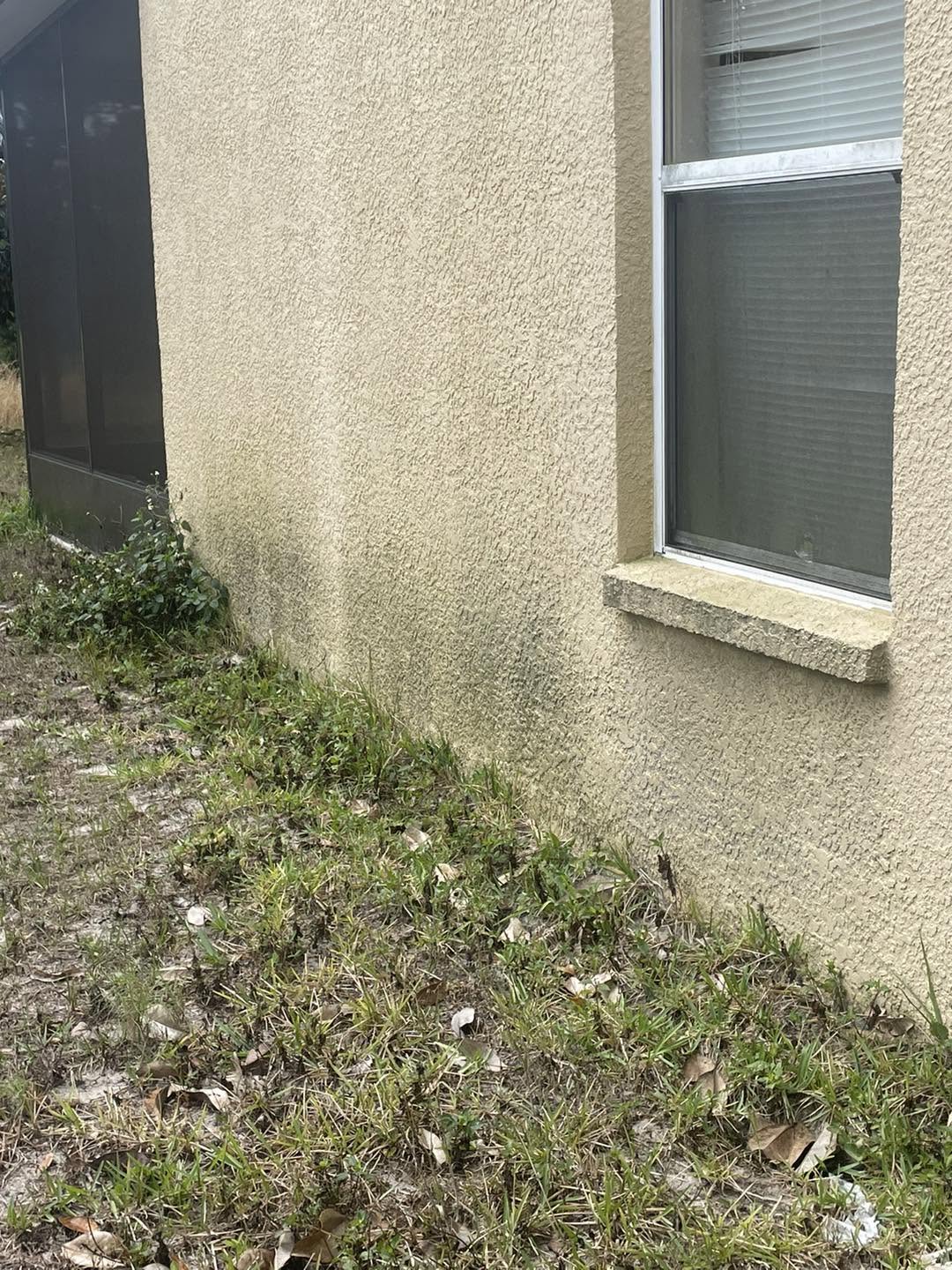
The most common by far. It appears as a green film or fuzz, worst on the north side of the house, behind shrubs, and anywhere irrigation spray lands on the wall. It thrives on moisture and shade, so it will always show up first where the wall dries slowest. Algae sits on the surface and comes off readily with a soft wash — but it returns fast if the moisture source is not addressed.
Black streaks and spots — mildew, or roof algae running down
Two different things that look similar. Black spotting on siding and soffits is typically mildew. Black streaks running vertically down a wall usually mean algae from the roof above is being carried down by rainwater — in which case cleaning the wall alone is treating the symptom. If your soffits and the wall under the gutter line are streaking, look up first.
Gray or yellow film — pollen, dust, and road grime
Not biological, and largely seasonal. Oak and pine pollen coats everything here in spring, and homes on busier roads pick up a fine traffic film year-round. It rinses off easily and is the least urgent of the group — though it does give algae something to hold onto if it is left to build up.
White chalky residue — efflorescence or oxidation
On stucco, block, and pavers, a white powdery bloom is usually efflorescence: mineral salts wicking out of the masonry and left behind as moisture evaporates. On older vinyl or aluminium siding, a chalky surface that comes off on your hand is oxidation — the finish breaking down under UV. The distinction matters, because oxidised siding needs careful, even cleaning or it will streak.
Orange or rust-colored staining
Almost always irrigation. Well water high in iron leaves rust staining wherever the sprinklers hit, and it concentrates on the lower few feet of the wall in a distinct arc. Fertiliser splash does something similar. This one is worth solving at the source — adjusting sprinkler throw or fitting an iron filter — because it will keep coming back regardless of how often the house is washed.
Why the north side is always worse
It gets the least direct sun, so it stays damp the longest after rain and overnight humidity. Add a shade tree or a narrow side yard with poor airflow and you have ideal conditions. If one elevation of your house looks years older than the rest, this is why — and it is why we often treat that side more thoroughly rather than uniformly.
What to do about each
- Algae and mildew: soft wash to kill it at the root, then reduce the moisture source — trim vegetation back off the wall, redirect irrigation spray.
- Roof-driven black streaks: clean the roof first, then the walls, or you will be doing the walls again shortly.
- Pollen and road film: a routine wash; it is cosmetic and straightforward.
- Efflorescence: treatable, but recurring efflorescence points to a moisture path in the masonry worth investigating.
- Rust staining: remove the staining and fix the irrigation, or it simply returns.
If you are unsure which of these you have, a photo is usually enough for us to tell you over the phone — and to tell you whether it is something that needs doing now or can wait.