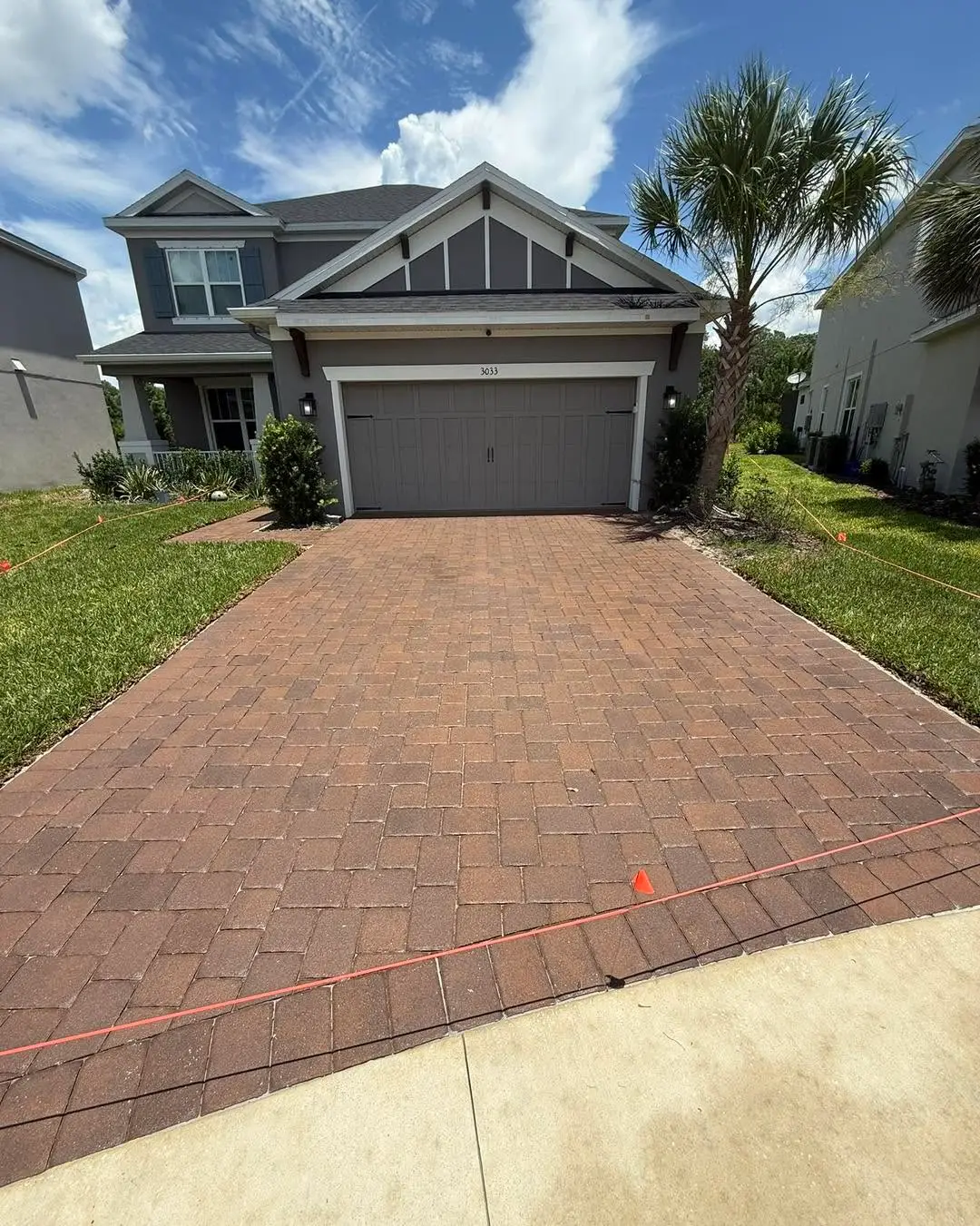
You had pavers installed, or you had them sealed, and a few weeks later a white bloom appeared across the surface. It looks like somebody spilled powder on the driveway. Scrubbing does almost nothing, and pressure washing seems to move it around rather than remove it.
This is the most common paver complaint we get, and it is worth understanding before anybody applies more sealer to it.
What efflorescence actually is
Concrete pavers are made with cement, and cement contains natural mineral salts. Moisture moving up through the paver carries those salts to the surface, the water evaporates in the Florida sun, and the salt is left behind as a white crystalline film.
It comes from inside the paver. That is why it returns after you wash it off, and why no amount of surface cleaning permanently solves it on its own.
Why Florida pavers get it so badly
Efflorescence needs moisture moving through the paver, and Florida supplies plenty. Daily summer rain, high water tables near the coast, irrigation running onto the driveway, and humid nights all keep the base damp enough to keep pushing salt upward.
New installations are the worst offenders because the pavers and the bedding sand are still curing and releasing. It is common to see it in the first year and then far less afterward.
How to tell efflorescence from sealer blush
These two look similar and get treated very differently, so it is worth a minute to tell them apart. Efflorescence is a dry, chalky, powdery film that sits on the surface and often appears in patches. Sealer blush is a cloudy, milky haze that looks like it is under a glossy layer, and it usually shows up across the whole sealed area rather than in patches.
Blush is moisture trapped beneath a sealer that went down too thick, or over a surface that was not fully dry. It is a sealing mistake. Efflorescence is a material behavior. If you are not sure which you are looking at, a photo usually settles it.
Why sealing over it makes it permanent
Sealing traps whatever is on the surface at the moment the sealer cures. Seal over an active efflorescence bloom and you have a permanent white haze suspended under a glossy coat, and the only way out is stripping the sealer and starting again.
This is the part that costs people money, and it is entirely avoidable. Any company that offers to seal your pavers while there is visible white haze on them is either not looking or not telling you.
How it gets removed properly
Efflorescence is removed with a dedicated efflorescence cleaner, which is a mild acid-based product that dissolves the mineral deposit rather than scrubbing at it. The surface is then neutralized and rinsed thoroughly. Done correctly it lifts cleanly.
Done incorrectly, acid etches the surface of the paver and leaves permanent dull patches, and on travertine it can do real damage. This is the point where most people decide to hand it over.
When to seal after treating it
Let the pavers dry properly first. We want the surface fully dry and the bloom no longer returning before any sealer goes down, which usually means waiting and checking rather than sealing on a fixed schedule.
On a brand new installation, the honest advice is often to wait. Letting the pavers go through a first cycle of blooming and cleaning gives you a much better sealing result than rushing to coat them the month they go in.
Keep reading
Frequently Asked Questions
Not sure if it is efflorescence or a sealing mistake?
Send Ron a photo and he will tell you which one you are looking at before anybody sells you sealer. Paver sealing across New Port Richey, Trinity, Palm Harbor, Odessa, Hudson, and Lutz.